More Than 1,000 Taiwan Stocks Trade Below 200-Day Average; Even Large Caps Affected, QIC’s Alex Lee Outlines Four Solutions
Commercial Times Wei Chiao-Yi Sun Pin-Hsun
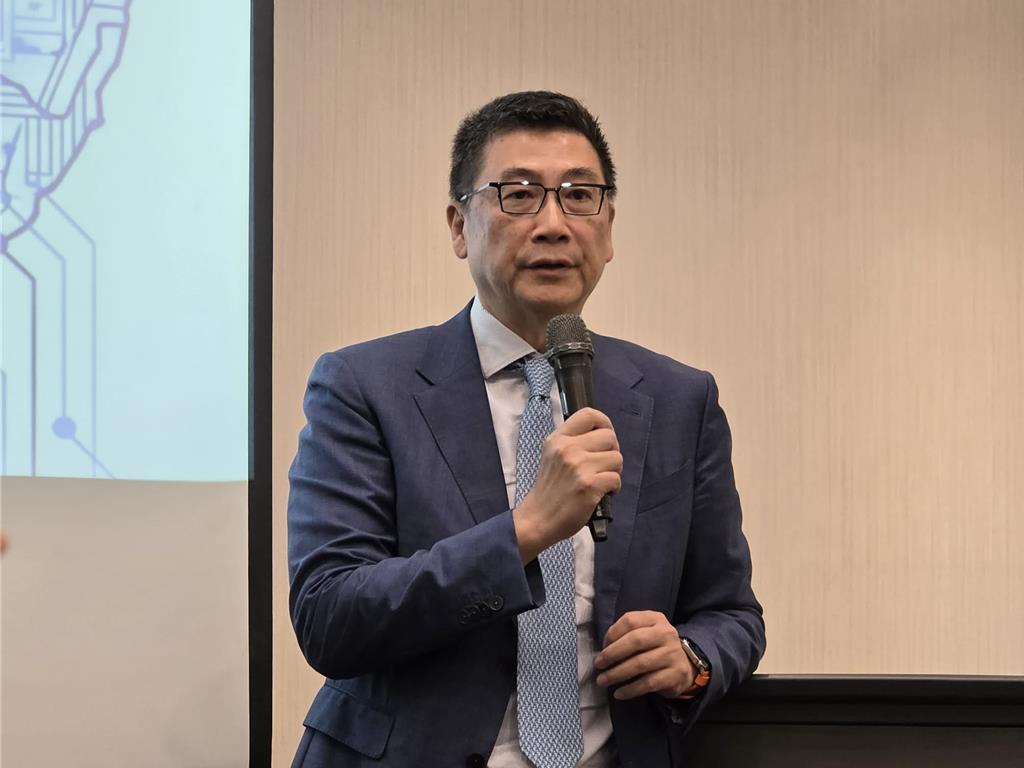
Taiwan’s TAIEX officially surpassed the 30,000-point mark in January 2026, reaching a historical high, with daily trading value consistently exceeding NT$800 billion. Despite Taiwan’s stock market having formally risen to become one of the world’s top ten key capital markets, there are still 1,071 companies—accounting for as much as 50%—whose share prices have fallen below the 200-day moving average. Even four large-cap companies with market capitalizations exceeding NT$10 billion have not been spared. Alex Lee, Founder and CEO of QIC (Quantitative Investment Capital), stated on the 31st that in this new capital era led by AI, companies must change their way of thinking and use the “Four Capital Market Action Guidelines” to reverse the situation.
Alex Lee stated that Taiwan’s stock market has evolved from a model dominated by high dividend yield and value investing ten years ago into a “growth-oriented capital market” driven by supporting global AI expansion and high levels of capital expenditure. In this vast and deep “deep sea era,” companies are as diverse and abundant as species in a marine ecosystem. Large enterprises centered around AI, TSMC, and its supply chain are like “giant sea creatures,” continuously absorbing resources and growing into international corporations beyond imagination.
However, within the same environment, the Taiwan stock market has shown extreme divergence. Currently, 1,071 companies have share prices below the 200-day moving average, accounting for as much as 50%. Alex Lee pointed out that among these companies, many have strong financial performance, but the core reason for their lagging market value lies in a “mindset” issue. If policymakers and corporate decision-makers do not change their thinking, old mindsets will struggle to enter this AI-led new capital era. This is also why QIC has specifically proposed the “Four Capital Market Action Guidelines” as a reference for decision-makers.
In recent years, Taiwan’s capital market has demonstrated remarkable momentum. Its market capitalization and daily trading volume rank 7th and within the top 10 globally, respectively. The net profit of the top 50 companies by market capitalization in 2025 is estimated to reach NT$3.4 trillion, 2.6 times that of 2015. Annual profit growth has increased from around 5% in the past to 22%, and is expected to accelerate further to 26% in 2026. In addition, total domestic and overseas equity fundraising reached a record high of NT$535 billion in 2025. All indicators point toward the arrival of a major growth era for Taiwan’s capital market.
QIC’s in-depth analysis found that beneath the market’s prosperity lies a significant hidden risk: 50% of all listed companies in Taiwan are trading below the 200-day moving average, falling into a “marginalization” trap. Among the 1,071 companies below the 200-day moving average, 1,029 are small-cap companies with market capitalizations below US$2 billion; 38 are mid-cap companies with market capitalizations between US$2 billion and US$10 billion, including President Chain Store Corporation (2912), China Steel Corporation (2002), Advantech Co., Ltd. (2395), International Games System Co., Ltd. (3293), E Ink Holdings Inc. (8069), and The Shanghai Commercial & Savings Bank, Ltd. (5876).
There are also four large-cap companies with market capitalizations exceeding US$10 billion, including Uni-President Enterprises Corporation (1216),
Evergreen Marine Corporation (Taiwan) Ltd. (2603), Taiwan Mobile Co., Ltd. (3045), and ASUSTeK Computer Inc. (2357).Even though these companies have solid financial fundamentals, in the foreseeable future and within Taiwan’s new capital market era, they clearly need to find new ways to articulate their capital market narratives in order to leverage market diversity into growth momentum and keep pace with the times.
Based on over a decade of serving hundreds of Taiwanese companies and engaging with nearly ten thousand domestic and international institutional investors, QIC has summarized four new strategic thinking directions that companies should adopt in this new era of Taiwan’s stock market:
Strategy 1: Reclaim the company’s growth trajectory. In a growth-oriented capital market, revenue or profit growth commands a valuation premium. Large cash dividend payouts are no longer the mainstream. Capital expenditures and equity financing undertaken for growth will be rewarded by the market.
Strategy 2: Companies should focus on articulating long-term vision and setting concrete “future-oriented” goals as the mainstream strategy, rather than emphasizing “past-oriented” explanations of financial statements. In a growth market and a rapidly changing environment, investors care more about future development blueprints. Companies should not adopt an “ostrich mindset” of waiting until success before speaking, but should instead propose transformation visions early and update progress regularly. One representative example is QIC’s thesis proposed three years ago: “TSMC supply chain to grow 10x over 10 years.”
Strategy 3: Define “key information” to precisely connect with investors. In the AI era of information overload, companies should define and provide “key information” rather than all information. Most corporate disclosures are easily buried in repetitive noise. Management must identify the core narrative so that company value can be efficiently recognized by target investors. Consistently delivering “key information” through earnings calls and roadshows is a critical methodology for standing out in a diversified market.
Strategy 4: Enhance ESG actions to materially increase market value, rather than merely completing ESG reports. QIC’s years of data and methodology demonstrate that ESG has a positive and critical impact on long-term market value enhancement. By actively embedding ESG principles into actual corporate management, systematically participating in international authoritative rankings, and achieving measurable progress, companies can more easily attract ESG-focused passive funds. In recent years, QIC has continuously helped companies included in the Taiwan cohort of the S&P Global Sustainability Yearbook achieve top global rankings, demonstrating successful cases where ESG is effectively integrated with market value creation.
To help companies implement value transformation, the 19th QIC CEO Week will be grandly held in Singapore on April 14. This forum is hosted by ITRI Biomedical Technology and Device Research Laboratories (BDL) and sponsored by AAMA Taipei, under the theme “AI, Biotech, and Beyond.” It will bring together 45 leading companies forming the strongest “Taiwan national team,” including Hon Precision Inc. (7769), Yesiang Enterprise Co., Ltd. (7909), C Sun Mfg. Ltd. (2467), Zhen Ding Technology Holding Limited (4958), Pan-International Industrial Corporation (2328), Nien Made Enterprise Co., Ltd. (8464), and WIN Semiconductors Corp. (3105), while also exclusively introducing high-quality pre-IPO companies to connect with global sovereign funds and long-term capital, aiming to build the largest in-person investment forum between Taiwan and Singapore.
News Source: https://www.ctee.com.tw/news/20260331700824-430301
 Request the Full Presentation QIC has prepared a comprehensive slide deck detailing these strategic shifts. Please complete the form below with your contact information, and we will distribute the presentation to you via email:
  https://forms.gle/cpMsL63oq23CMuM86